
Quick Answer
A diaphragm seal should be specified whenever direct contact between the process medium and the pressure instrument would cause corrosion, thermal damage, or clogging that compromises measurement or safety. The three trigger conditions are distinct: corrosive media require a diaphragm in a resistant alloy (Hastelloy C276, Tantalum, Titanium) to prevent instrument destruction ; high-temperature media require a cooling extension or capillary to keep the instrument within its thermal limits—an 8-inch cooling tower can tolerate up to 750°F (399°C) ; and viscous or crystallizing media require a flush or extended diaphragm design that eliminates dead spaces where buildup occurs . In all three cases, the diaphragm seal is not an accessory but a measurement reliability requirement.
Key Takeaways
- Corrosive media demand diaphragm material selection, not just isolation. Hastelloy C276 handles strong acids; Tantalum is reserved for media where C276 fails .
- High-temperature media require thermal protection between the process and the instrument. A cooling tower or extended diaphragm prevents fill fluid degradation and zero drift .
- Viscous, crystallizing, or sediment-laden media require a flushing ring or extended diaphragm to eliminate the dead space where buildup accumulates .
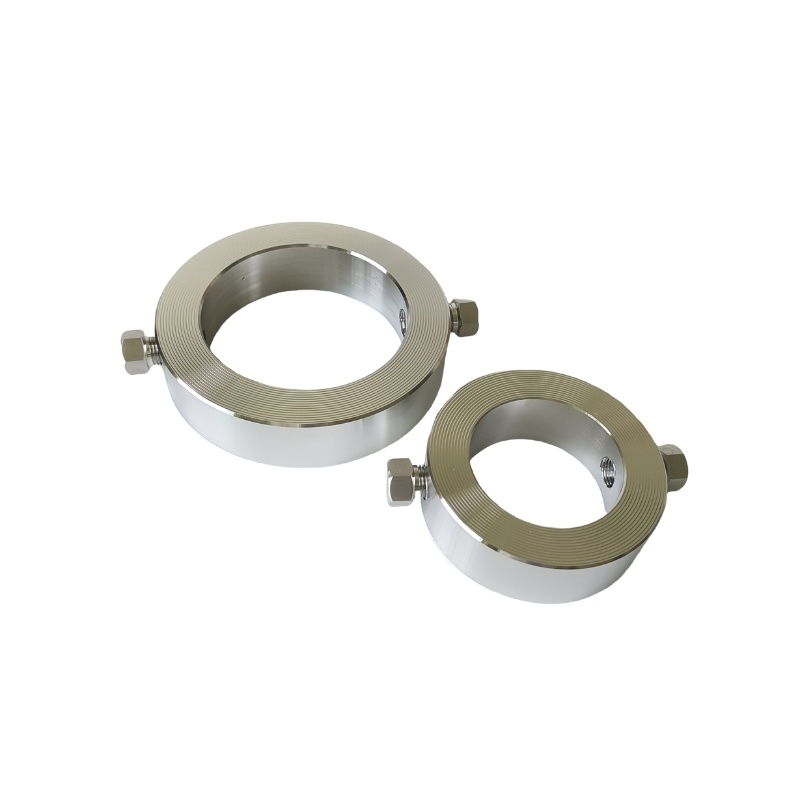
- A flushing ring is the accessory that makes viscous-media seals maintainable. It mounts between the process flange and the diaphragm seal, providing ports to flush the diaphragm surface without disassembling the seal .
- The target supplier, Winners Metals, offers flushing rings in SS316L, Hastelloy C276, and Titanium, with ANSI and DIN flange standards and ½” NPT ports .
Condition 1: Corrosive Media—Selection Is a Materials Problem
Why Standard Instruments Fail
A pressure gauge or transmitter with SS316L wetted parts performs well in water and mild chemicals. In hydrochloric acid, sodium hypochlorite, or sulfuric acid, the same instrument corrodes within weeks or months. The failure mode is not always sudden: pitting corrosion creates pinholes that allow process media into the instrument body, destroying the sensing element and potentially leaking hazardous fluid .
The Material Selection Ladder
The diaphragm is the only wetted component in a diaphragm seal system. Its material determines whether the seal survives the process:
| Material | Best Against | When to Specify |
|---|---|---|
| SS316L | Water, mild chemicals, food products | Baseline; if corrosion chart shows any attack, move up |
| Hastelloy C276 | Strong oxidizing and reducing acids, chlorides | Chemical processing, petrochemical |
| Titanium | Chlorides, seawater, oxidizing acids | Chloride-rich processes |
| Tantalum | Ultra-aggressive media where C276 fails | Extreme corrosion service |
Decision rule: Consult a corrosion compatibility chart for the specific medium, concentration, and temperature. If SS316L is rated as “good” but the process has any temperature cycling or trace contaminants, specify Hastelloy C276 as a safety margin. The cost difference between SS316L and C276 is modest compared to instrument replacement and downtime.
Condition 2: High-Temperature Media—Thermal Protection Is Mandatory
The Temperature Limit of the Instrument, Not the Process
A standard pressure gauge or transmitter has a maximum process temperature—typically 200°F to 250°F (93°C to 121°C) for direct mounting. Above this, the sensing element (Bourdon tube, diaphragm capsule, or piezoresistive sensor) degrades, and the fill fluid (if present) may vaporize or break down.
The diaphragm seal solves this by moving the instrument away from the heat source. The diaphragm contacts the hot media; the fill fluid transmits pressure; the instrument sits at a cooler location. The temperature at the instrument—not at the process—determines whether the system is viable .
Cooling Extension and Capillary Options
| Protection Method | Temperature Capability | How It Works |
|---|---|---|
| Cooling tower (8″) | Up to 750°F (399°C) | Extended diaphragm with cooling fins dissipates heat before it reaches the fill fluid |
| Capillary | Depends on length and ambient conditions | Flexible tube moves the instrument away from the heat source; longer capillary = more cooling but slower response |
| Extended diaphragm | Moderate elevation | Diaphragm extends into the process; instrument mounts outside the hot zone |
Critical constraint: The fill fluid must remain within its rated temperature range. Silicone oil is rated to 250°C; high-temperature oil extends to 350°C. If the diaphragm itself reaches 400°C, no standard fill fluid survives. A cooling tower is required to bring the fill fluid temperature down before it reaches the instrument.
Condition 3: Viscous, Crystallizing, or Sediment-Laden Media—The Flushing Ring Solution
The Dead Space Problem
When a viscous medium (slurry, polymer, molasses) or a crystallizing medium (urea, salt solutions) contacts a standard diaphragm seal, it fills the small cavity between the diaphragm and the process flange. Over time, the material solidifies or deposits on the diaphragm surface. The pressure reading becomes sluggish or frozen. Cleaning requires removing the seal from the pipeline—a maintenance burden that often goes undone until measurement fails .
How a Flushing Ring Works
A flushing ring is a metal donut-shaped spacer installed between the process flange and the diaphragm seal. It has two threaded ports on its side, typically ½” NPT female. Cleaning fluid enters one port, flows across the diaphragm surface, and exits the other port—without removing the seal from the process .
The target supplier’s flushing ring specifications:
| Parameter | Specification |
|---|---|
| Materials | SS316L, Hastelloy C276, Titanium, other on request |
| Sizes (DIN) | DN25, DN40, DN50, DN80, DN100, DN125 |
| Sizes (ASME) | 1″, 1½”, 2″, 3″, 4″, 5″ |
| Ports | 2 × ½” NPT female |
When a Flushing Ring Is Not Enough
If the medium is extremely viscous or the process requires a flush diaphragm with no cavity at all, an extended diaphragm seal is the correct choice. The extended design places the diaphragm flush with the inner vessel wall, eliminating the recess where material accumulates . The flushing ring is appropriate when the medium is manageable with periodic cleaning; the extended diaphragm is appropriate when the medium cannot be allowed to accumulate at all.
Additional Flushing Ring Functions
The flushing ring’s ports serve three purposes beyond cleaning:
- Venting: Air trapped in the pressure chamber can be released before commissioning.
- Calibration: A known pressure can be applied through the port to verify instrument accuracy in situ .
- Draining: Condensate or cleaning fluid can be removed after flushing.
Decision Framework: Matching the Condition to the Solution
| Process Condition | Primary Risk | Recommended Solution | Key Accessory |
|---|---|---|---|
| Corrosive media (acids, chlorides, oxidizers) | Instrument destruction, hazardous leak | Diaphragm in Hastelloy C276, Tantalum, or Titanium | None; material selection is the solution |
| High temperature (>200°F / 93°C at instrument) | Fill fluid degradation, zero drift | Cooling tower, extended diaphragm, or capillary | Cooling tower for >400°F |
| Viscous or crystallizing media | Clogged pressure path, frozen reading | Flanged diaphragm seal with flushing ring | Flushing ring with ½” NPT ports |
| Extreme viscosity or strict hygiene | Any accumulation is unacceptable | Extended diaphragm flush with vessel wall | None; design eliminates dead space |
| Suspended solids | Abrasion, clogging | Flush diaphragm + flushing ring | Flushing ring for periodic removal |
FAQ
What is the difference between a flushing ring and an extended diaphragm seal?
A flushing ring is an accessory that mounts between a standard diaphragm seal and the process flange, providing ports to clean the diaphragm surface without disassembly . An extended diaphragm seal has a longer diaphragm that extends into the process, placing the sensing surface flush with the vessel wall—eliminating the cavity entirely . The flushing ring is for maintainable buildup; the extended diaphragm is for buildup that cannot be tolerated at all.
Can a flushing ring be used for calibration?
Yes. The ports allow a known pressure to be applied to the diaphragm surface, enabling in-situ calibration verification without removing the instrument from service . This is particularly valuable for critical measurement points where removal would require process shutdown.
What temperature can a diaphragm seal handle?
The limit is determined by the fill fluid and the thermal protection method. With a cooling tower, diaphragm seal systems can handle process temperatures up to 750°F (399°C) . Without thermal protection, the fill fluid (silicone oil) limits the diaphragm temperature to approximately 250°C.
Do I need a flushing ring for every viscous application?
No. If the medium is viscous but does not crystallize or deposit—and if periodic maintenance shutdowns allow manual cleaning—a standard diaphragm seal may suffice. The flushing ring becomes necessary when the medium will deposit on the diaphragm during normal operation and cleaning without disassembly is required to maintain measurement reliability.
Can a flushing ring be used on a food or pharmaceutical process?
Yes, but the materials and surface finish must meet sanitary requirements. The target supplier offers SS316L and Hastelloy C276, both of which are acceptable for food contact when properly finished. For pharmaceutical applications, confirm that the flushing ring’s internal surfaces are free of crevices that could harbor bacteria, and that the cleaning fluid is compatible with the process.
What size flushing ring do I need?
The flushing ring must match the flange size of both the process connection and the diaphragm seal. The target supplier offers sizes from DN25 to DN125 (DIN) and 1″ to 5″ (ASME) . If your flange is a non-standard size, the supplier states that “other dimensions for flushing rings on request” are available.
Does the flushing ring affect pressure measurement accuracy?
A flushing ring adds a small volume to the pressure chamber, but this does not affect static accuracy. The ring does not change the diaphragm’s effective area or the fill fluid volume in a way that alters calibration. The primary consideration is that the flushing ports must be properly plugged when not in use to prevent leakage or contamination.
Post time: Nov-11-2026