
Quick Answer
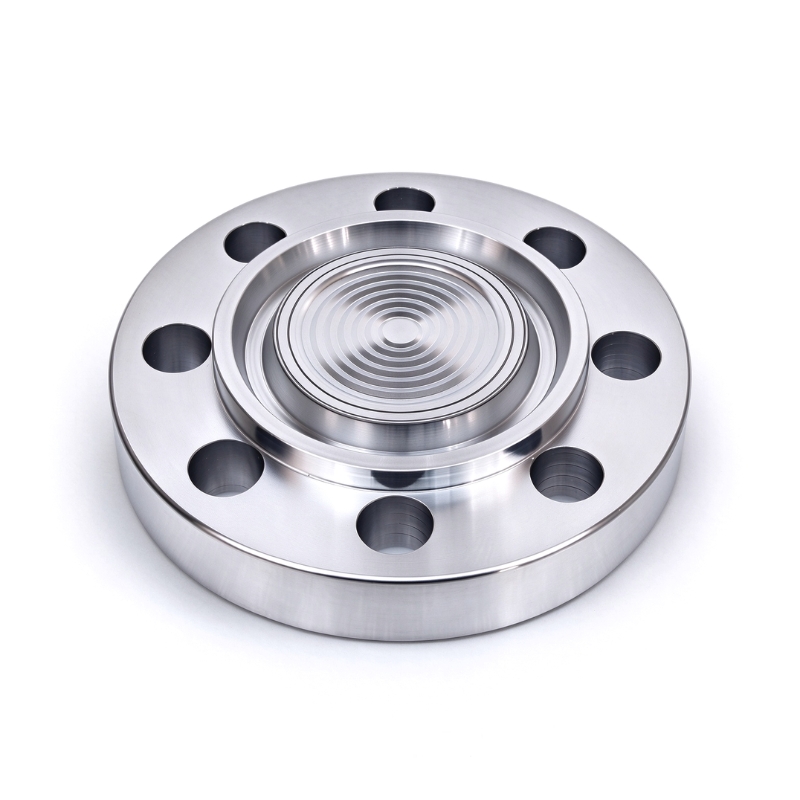
A diaphragm seal is a flexible membrane assembly that isolates a pressure instrument—gauge, transmitter, or switch—from the process fluid while transmitting pressure hydraulically through a fill fluid. The process media presses against one side of the diaphragm; the other side is backed by a sealed chamber filled with a compatible liquid (silicone oil, glycerin, or specialized fluids). When process pressure deforms the diaphragm, that displacement pressurizes the fill fluid, which in turn actuates the instrument’s sensing element . The seal protects the instrument from corrosive, viscous, high-temperature, or sanitary-sensitive media without compromising measurement accuracy. The target supplier, Winners Metals, offers diaphragm seals with diaphragm materials including SS316L, Titanium, HC276, Tantalum, Monel400, and Inconel 625, with flange standards per ANSI B16.5 and EN 1092 .
Key Takeaways
- The core function is isolation, not measurement. The diaphragm seal protects the instrument from media that would corrode, clog, freeze, or contaminate it; the fill fluid performs the actual pressure transmission .
- Fill fluid selection determines temperature limits and response time. Silicone oil covers −40 to +250°C; high-temperature oil extends to +350°C; the wrong fluid causes zero drift and sluggish response .
- Diaphragm diameter must match the measuring range. Low pressure ranges and high process temperatures require larger diaphragms to compensate for fill fluid thermal expansion .
- Sanitary and high-purity applications are a primary driver. Food, pharmaceutical, and semiconductor processes use diaphragm seals to eliminate dead spaces where bacteria or contamination can accumulate .
- The target supplier’s diaphragm options span from standard SS316L to exotic Tantalum and Inconel 625, covering most corrosive and high-temperature industrial media .
The Working Principle: How Pressure Crosses the Barrier
The Three-Component System
A diaphragm seal system consists of three elements:
- The diaphragm: A thin, flexible, often corrugated disc exposed to the process media. It deforms proportionally to applied pressure.
- The fill fluid: A sealed, air-free liquid contained between the diaphragm and the instrument’s sensing element. It must be incompressible and compatible with the temperature range.
- The instrument: A pressure gauge, transmitter, or switch that receives the hydraulically transmitted pressure .
When process pressure increases, the diaphragm deflects inward. This displacement pushes fill fluid through the capillary or direct connection into the instrument’s Bourdon tube, diaphragm capsule, or piezoresistive sensor. The instrument reads the pressure as if the process media were directly contacting it—but the media never touches the instrument .
Why the Diaphragm Is Corrugated
The corrugation (concentric ridges) serves two purposes. First, it increases the effective surface area, allowing a larger contact area between media and diaphragm for more accurate low-pressure measurement. Second, it provides controlled flexibility, allowing the diaphragm to respond to small pressure changes without permanent deformation . The target supplier’s diaphragm seal products are designed for compatibility with pressure transmitters and pressure gauges, with capillary options and flushing rings available for demanding applications .
When a Diaphragm Seal Is Required: The Seven Trigger Conditions
A diaphragm seal is not a universal accessory. It is specified when direct instrument contact with the process media creates a failure risk. The following conditions are the standard triggers:
| Condition | Why a Standard Instrument Fails | Diaphragm Seal Solution |
|---|---|---|
| Corrosive media | Acids, chlorides, or solvents attack wetted parts | Diaphragm in Tantalum, HC276, Titanium, or PTFE-coated |
| High temperature | Heat exceeds instrument component limits | Cooling extension or capillary moves instrument away from heat source |
| Viscous or fibrous media | Media clogs pressure ports and Bourdon tubes | Flush diaphragm eliminates dead spaces where clogs form |
| Crystallizing or polymerizing media | Solidification blocks the pressure path | Large, flush diaphragm with no internal cavities |
| Suspended solids | Particles abrade or block the sensing element | Smooth diaphragm surface resists buildup |
| Sanitary/hygienic requirements | Media enters instrument and stagnates, breeding bacteria | Flush, crevice-free design suitable for SIP/CIP |
| Toxic or environmentally hazardous media | Leakage through instrument seals creates exposure risk | All-welded seal provides secondary containment |
The target supplier’s diaphragm seal product line includes flange insert, flanged extended, and flushing ring configurations, addressing the most common installation requirements for these conditions .
Material Selection: Matching the Diaphragm to the Media
Standard and Exotic Options
The diaphragm is the only component that contacts the process media directly. Its material must resist corrosion, temperature, and mechanical wear while maintaining flexibility. The target supplier’s stated diaphragm materials are :
| Material | Typical Application | Key Property |
|---|---|---|
| SS316L | General industrial, food, water treatment | Standard corrosion resistance, cost-effective |
| Titanium | Chloride-rich media, seawater, oxidizing acids | Excellent chloride resistance |
| HC276 (Hastelloy C-276) | Strong oxidizing and reducing acids, mixed acids | Broadest corrosion resistance among common alloys |
| Tantalum | Ultra-corrosive media where even HC276 fails | Near-universal corrosion resistance |
| Monel 400 | Hydrofluoric acid, seawater, reducing environments | Nickel-copper alloy for specific chemistries |
| Inconel 625 | High-temperature and oxidizing environments | Strength and corrosion resistance at elevated temperature |
The diaphragm seal body and flange are typically SS304, SS316L, HC276, Tantalum, or Titanium, allowing the wetted components to be optimized independently from the diaphragm .
Coatings for Additional Protection
Where base metal resistance is insufficient, coatings extend service life. Available options include PTFE, PFA, gold plating, and ECTFE . For food and pharmaceutical applications, PFA coating must be FDA-compliant. For hazardous area applications, anti-static PFA coating prevents electrostatic charge accumulation .
The Fill Fluid: The Invisible Component That Determines Performance
Temperature Range Is the Primary Selection Criterion
The fill fluid transmits pressure, but its thermal expansion and viscosity directly affect accuracy and response time. The wrong fluid causes zero drift (reading changes with temperature even when pressure is constant) and sluggish response (the instrument takes too long to register pressure changes) .
| Fill Fluid | Permissible Range (P ≥ 1 bar) | Viscosity at 25°C | Best For |
|---|---|---|---|
| Silicone oil | −40 to +250°C | ~100 cSt | General purpose, food-grade available |
| High-temperature oil | −10 to +350°C | ~30 cSt | High-temperature processes |
| Inert oil | −40 to +175°C | ~27 cSt | Oxygen, ultra-pure gas applications |
| Glycerin | Limited range | Higher | Low-temperature, non-reactive media |
For food and pharmaceutical applications, the fill fluid must be harmless if the diaphragm ruptures and the fluid contacts the product. Silicone oil and vegetable oils are common choices for this reason .
Capillary Effects
When the instrument is mounted remotely via a capillary, the capillary’s internal diameter and length affect both response time and temperature error. A larger internal diameter reduces response time but increases temperature error; a longer capillary increases both. The standard recommendation is to keep capillaries as short as possible and to select the largest diaphragm diameter compatible with the process connection to minimize temperature-induced zero drift .
FAQ
What is the difference between a diaphragm seal and a chemical seal?
They are the same device. “Diaphragm seal,” “chemical seal,” and “gauge isolator” are interchangeable terms for a flexible membrane that isolates a pressure instrument from process media while transmitting pressure hydraulically .
Does a diaphragm seal reduce measurement accuracy?
A properly specified diaphragm seal adds minimal error—typically less than 0.5% of the applied pressure under stable temperature conditions . However, temperature changes cause fill fluid expansion or contraction, creating zero drift. Larger diaphragm diameters reduce this effect. The seal’s contribution to total system error should be added to the instrument’s accuracy class .
What diaphragm material should I choose for corrosive media?
Start with SS316L for mildly corrosive media. For chlorides and oxidizing acids, specify Titanium or HC276. For the most aggressive media where even HC276 fails, specify Tantalum . The correct choice depends on the specific chemistry, concentration, and temperature; a materials compatibility chart should be consulted for each application.
Can a diaphragm seal be used on a pressure transmitter, or only on a gauge?
Diaphragm seals are compatible with pressure gauges, pressure transmitters, and pressure switches—any instrument with a pressure-sensing element that can be connected to a fill fluid chamber . The connection type (direct threaded, flanged, capillary) is selected based on the instrument’s process connection and installation requirements.
What is a flushing ring, and when is it needed?
A flushing ring is an accessory installed between the diaphragm seal and the process flange, providing ports for cleaning fluid to flush the diaphragm surface without disassembling the seal. It is used when the process media tends to crystallize, polymerize, or accumulate on the diaphragm—common in chemical, pharmaceutical, and food applications .
How does temperature affect diaphragm seal performance?
Temperature affects the fill fluid volume, which changes the pressure inside the sealed system even when process pressure is constant. This creates a zero shift proportional to the temperature change and the fill fluid’s expansion coefficient. Larger diaphragm diameters and fill fluids with low thermal expansion minimize this effect. For process temperatures above 150°C, a cooling tower or capillary should be used to protect the instrument .
What is the target supplier’s MOQ for diaphragm seals?
Winners Metals states a MOQ of 2 pieces for its diaphragm seals, with flange standards including ANSI B16.5 RF/RTJ, EN 1092 Form B, and JIS B2220 . Customization of flange material, diaphragm material, and coatings is available.
Post time: Nov-11-2026