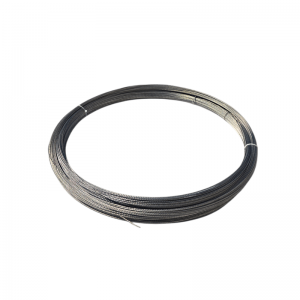
Resistance Temperature Detector (RTD) Assembly


Product Description
An RTD assembly is a high-precision temperature sensor. Its core sensing element is typically made from high-purity metals such as platinum (Pt) or copper (Cu). Platinum RTDs offer high accuracy and a wide temperature range, but at a higher cost, making them suitable for precision and high-temperature measurement applications. Copper RTDs provide excellent linearity and are more economical, yet their measurement range is narrower (-50°C to +150°C).
An assembled RTD assembly consists of a sensing element (platinum or copper wire), connection leads, a protection tube, and a connection head. The main types are platinum RTD assemblies and copper RTD assemblies.
Working Principle of RTDs
An RTD (Resistance Temperature Detector) measures temperature by utilizing the property that the electrical resistance of a metal conductor changes with temperature. When the temperature changes, the resistance value exhibits a highly linear functional relationship with the temperature. By precisely measuring this resistance, the corresponding temperature value can be accurately determined. Unlike thermocouples, RTDs do not require cold junction compensation. They offer stable signal output and high accuracy, making them well-suited for measurements in the low to medium temperature ranges.
Features of RTDs
• Robust construction with high mechanical strength
• Flexible installation and easy maintenance
• High measurement accuracy and excellent stability
• Stable signal output with strong anti-interference capability
Applications of RTDs
• Power Industry: Temperature measurement in power plant boilers, steam pipelines, and turbine exhaust systems.
• Petrochemical Industry: Temperature monitoring of reactors, cracking furnaces, pipelines, and storage tanks.
• Metallurgical Industry: Temperature control in blast furnaces, hot blast stoves, and steel rolling production lines.
• Mechanical Equipment: Overheat protection for engines, bearings, gearboxes, etc.
• HVAC (Heating, Ventilation, and Air Conditioning): Water and air temperature measurement in central air conditioning systems.
• Laboratories & Scientific Research: Applications requiring high-precision and highly stable temperature measurement.
Types of RTDs
|
Type |
Measurement Range |
Accuracy Class A |
Accuracy Class B |
|
PT100 |
-200℃ to +500℃ |
±0.15℃ |
±0.3℃ |
|
Cu50, Cu100 |
-50℃ to +150℃ |
±0.3℃ |
|
RTD Selection Guide
RTD Type: PT100, Cu50, Cu100
Accuracy: ±0.15℃ / ±0.3℃
Number of Elements: Single / Dual
Process Connection: Threaded or Flange, Removable or Fixed
Sheath Material: 304/310/316L/321 Stainless Steel, Inconel 600
Sheath Diameter (mm): φ12, φ16, Custom
Length or Insertion Depth: Customizable
Connection Head Type: Splash-Proof, Waterproof