
 Quick Answer
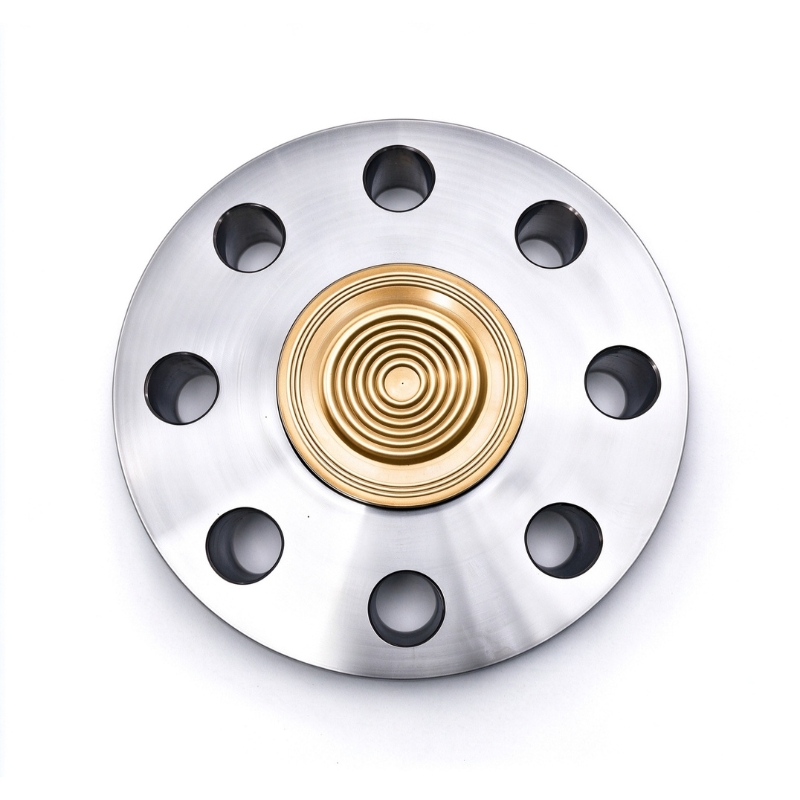
Choosing a reliable diaphragm seal manufacturer requires verifying four things beyond price: material traceability, documented pressure testing, application engineering support, and a clear quality certification. A supplier who cannot provide Mill Test Certificates (MTCs) traceable to the actual diaphragm and flange materials, or who cannot document hydrostatic or leak testing on the assembled system, is asking you to absorb the risk of a pressure boundary failure . The target supplier, Winners Metals (Baoji Winners Metals), states capabilities in ASME B16.5, EN 1092-1, and JIS B2220 flange standards, with diaphragm materials including SS316L, Hastelloy C276, Monel 400, Titanium, and Tantalum, and offers flushing rings, capillaries, and custom coatings . But stated capability is not the same as verified quality—the selection process must test both.
Key Takeaways
- Material traceability is the baseline requirement. A diaphragm seal is a pressure boundary component; the MTC must link the diaphragm and flange heat numbers to the certificate. Without this, material substitution is undetectable.
- Leak testing must be documented on the assembled system. Testing individual components does not prove the finished seal will hold. Hydrostatic testing on the fully assembled and filled system verifies weld and joint integrity .
- Application engineering separates manufacturers from catalog sellers. A reliable supplier asks about process chemistry, temperature, pressure range, and cleaning regime before recommending a material—not after a failure .
- Certification scope matters more than the certificate logo. An ISO 9001 certificate issued to a trading company does not confirm that the factory operating under that entity’s name produces to the same standard.
- The target supplier’s stated capabilities align with industry requirements, but buyers must request lot-specific documentation, not general statements of practice.
Criterion 1: Material Traceability and Certification
Why a Certificate of Conformance Is Not Enough
A Certificate of Conformance (COC) confirms that the product was manufactured to approved drawings and specifications at the time of shipment . It is a baseline document, but it does not include measured test data. For a diaphragm seal, where the diaphragm is the thinnest physical barrier between process media and the atmosphere, a COC without supporting material and test records is insufficient.
What to Request
| Document | What It Proves | What It Does Not Prove |
|---|---|---|
| Mill Test Certificate (MTC) for diaphragm and flange | Chemical composition and mechanical properties match the specified alloy | That the correct material was installed in your assembly |
| Heat number traceability on the finished seal | The MTC heat number matches the component | That the diaphragm was not substituted after testing |
| Positive Material Identification (PMI) report | On-site chemical verification of the installed component | Full mechanical properties |
| Certificate of Conformance (COC) | Manufacture to drawing | Actual performance |
Source: Industry practice as documented by Ashcroft and Badotherm .
The target supplier states it offers SS316L, Hastelloy C276, Monel 400, Titanium, and Tantalum as diaphragm and flange materials, with gold, Rhodium, PFA, and PTFE coatings available . For a critical application, request the MTC for the specific lot and, for high-integrity service, a PMI report confirming the installed diaphragm material matches the specification.
The Trading Company Risk
A trading company can forward a mill certificate from a partner factory. What it cannot easily provide is lot-specific traceability connecting the certificate to the diaphragm in your seal. If the supplier cannot explain how the heat number on the MTC is linked to the finished assembly, the documentation chain is broken.
Criterion 2: Pressure and Leak Testing Documentation
Why Testing the Assembled System Matters
A diaphragm seal is not a collection of independently tested parts. It is a sealed system: diaphragm, fill fluid, capillary (if applicable), and instrument connection. The integrity of the welds, the hermeticity of the fill, and the mechanical strength of the assembly determine whether the system will perform .
Hydrostatic pressure testing must be performed on the fully assembled and properly filled system to verify the integrity of welds, joints, and pressure-containing components . Testing a diaphragm before assembly, or a flange before welding, does not prove the finished seal will hold.
What to Ask For
- Hydrostatic test report for the assembled seal, stating test pressure and duration. The test pressure should be based on the lowest maximum allowable working pressure (MAWP) of any component in the assembly .
- Helium leak test if absolute hermeticity is required (e.g., differential pressure applications or vacuum service). Helium testing detects leak rates far smaller than bubble testing and is appropriate where fill fluid loss would cause measurement drift .
- Dye penetrant (PT) or radiographic (RT) examination of critical welds, if the application involves toxic or hazardous media.
The target supplier’s product page states “rigorous leak testing to ensure diaphragm integrity” for its insert-type seals, but does not specify the test method or provide a sample report. Request a redacted sample test report before placing an order.
Criterion 3: Application Engineering and Technical Support
The Questions a Reliable Supplier Asks
A supplier who quotes a diaphragm seal without asking about the process is selling a commodity. A reliable manufacturer asks:
- What is the process medium (chemistry, concentration, trace contaminants)?
- What is the operating temperature at the diaphragm, and does it cycle?
- What is the pressure range, including vacuum or overpressure conditions?
- Is the medium viscous, crystallizing, or sediment-laden? (This determines whether a flushing ring or extended diaphragm is needed.)
- What is the cleaning regime (CIP/SIP, solvent flush, manual)?
- What flange standard and size is the process connection?
The GII Research executive summary on diaphragm seals emphasizes that “industry leaders should begin with disciplined application definition” —documenting pressure, temperature, vacuum exposure, process chemistry, solids content, pulsation, cleaning regime, flange standard, and required response time before selecting materials or configurations .
The target supplier’s product page lists applications and materials but does not describe an application engineering process. Ask for a technical questionnaire or a sample of how the supplier documents process conditions before recommending a configuration. If the supplier cannot produce one, the “support” is likely reactive rather than preventive.
Criterion 4: Quality System Scope and Manufacturing Location
What ISO 9001 Does and Does Not Cover
The target supplier’s “About Us” page states a focus on “product development, manufacturing, and sales” and lists products including diaphragm seals, pressure gauges, transmitters, and thermocouples . The company describes itself as a “comprehensive enterprise integrating R&D, manufacturing, and sales” .
Verify:
- Is the ISO 9001 certificate issued to Baoji Winners Metals as the manufacturing entity, or to a trading arm?
- Does the certificate scope explicitly include “manufacture of diaphragm seals” or similar language?
- Is the audited production address consistent with the company’s stated location in Baoji, Shaanxi ?
A certificate issued to a sales office, or with a scope limited to “distribution,” does not confirm manufacturing quality control.
Factory Verification
For a first order or a critical application, request:
- Live video walkthrough of the production area, showing diaphragm forming, welding, assembly, and testing stations.
- Identification of test equipment (hydrostatic test bench, helium leak detector, PMI analyzer) and calibration records.
A trading company cannot show these because it does not operate them.
Criterion 5: Customization and Accessory Support
The Flushing Ring and Capillary Question
The target supplier offers flushing rings, capillaries, and custom flanges as accessories . These are not optional add-ons for many applications—they determine whether the seal remains maintainable and accurate over its service life.
- Flushing ring: Required for viscous, crystallizing, or sediment-laden media. The supplier’s flushing ring product page specifies SS316L, Hastelloy C276, Titanium, with ANSI and DIN sizes and ½” NPT ports.
- Capillary: Required when the instrument must be remote-mounted (high temperature, vibration, access constraints). Capillary length and internal diameter affect response time and temperature error .
A supplier who offers these accessories but cannot explain when they are required, or how capillary length affects accuracy, is not providing engineering support. Ask the supplier to recommend a configuration for a specific application scenario (e.g., “urea service, 180°C, 25 bar, crystallizing”) and evaluate whether the recommendation addresses the relevant failure modes.
FAQ
What is the most important document to request from a diaphragm seal manufacturer?
The Mill Test Certificate (MTC) for the diaphragm and flange materials, traceable to the heat numbers on your specific assembly. Without this, you cannot verify that the alloy supplied matches the specification. A Certificate of Conformance alone does not include measured material data .
Does a diaphragm seal need hydrostatic testing on the assembled system?
Yes, if the application involves hazardous, toxic, or high-pressure media. Testing individual components does not verify the integrity of welds and joints in the finished seal. Hydrostatic testing on the fully assembled and filled system confirms that the pressure boundary holds .
How can I tell if a supplier is a manufacturer or a trading company?
Request a live video walkthrough of the production area, showing diaphragm forming, welding, assembly, and test equipment. A trading company cannot show these. Also check whether the ISO 9001 certificate is issued to the entity that will manufacture your seals, and whether the scope includes manufacturing.
What should I ask about application engineering support?
Ask the supplier to walk through a specific application scenario—for example, “hydrochloric acid, 80°C, 10 bar, with suspended solids.” A capable supplier will ask about concentration, trace contaminants, cleaning regime, and whether a flushing ring is needed before recommending a diaphragm material. A catalog seller will quote SS316L and wait for the order.
Is a flushing ring always necessary for viscous media?
Not always. If the medium is viscous but does not crystallize or deposit, and maintenance shutdowns allow manual cleaning, a standard seal may suffice. A flushing ring is required when the medium will deposit during normal operation and cleaning without disassembly is necessary to maintain measurement reliability.
What certifications should the diaphragm seal assembly include?
At minimum: Certificate of Conformance (COC). For critical applications: hydrostatic test report, material traceability (MTC), and PMI if specified. For toxic or hazardous media: helium leak test and weld examination (PT/RT) as appropriate .
Does the target supplier (Winners Metals) meet these criteria?
The supplier states capabilities in multiple flange standards, exotic diaphragm materials, and accessory offerings . It describes itself as a manufacturer with R&D and production. However, stated capability must be verified: request lot-specific MTCs, a sample test report, and a live factory walkthrough before placing a critical order.
Post time: Nov-11-2026